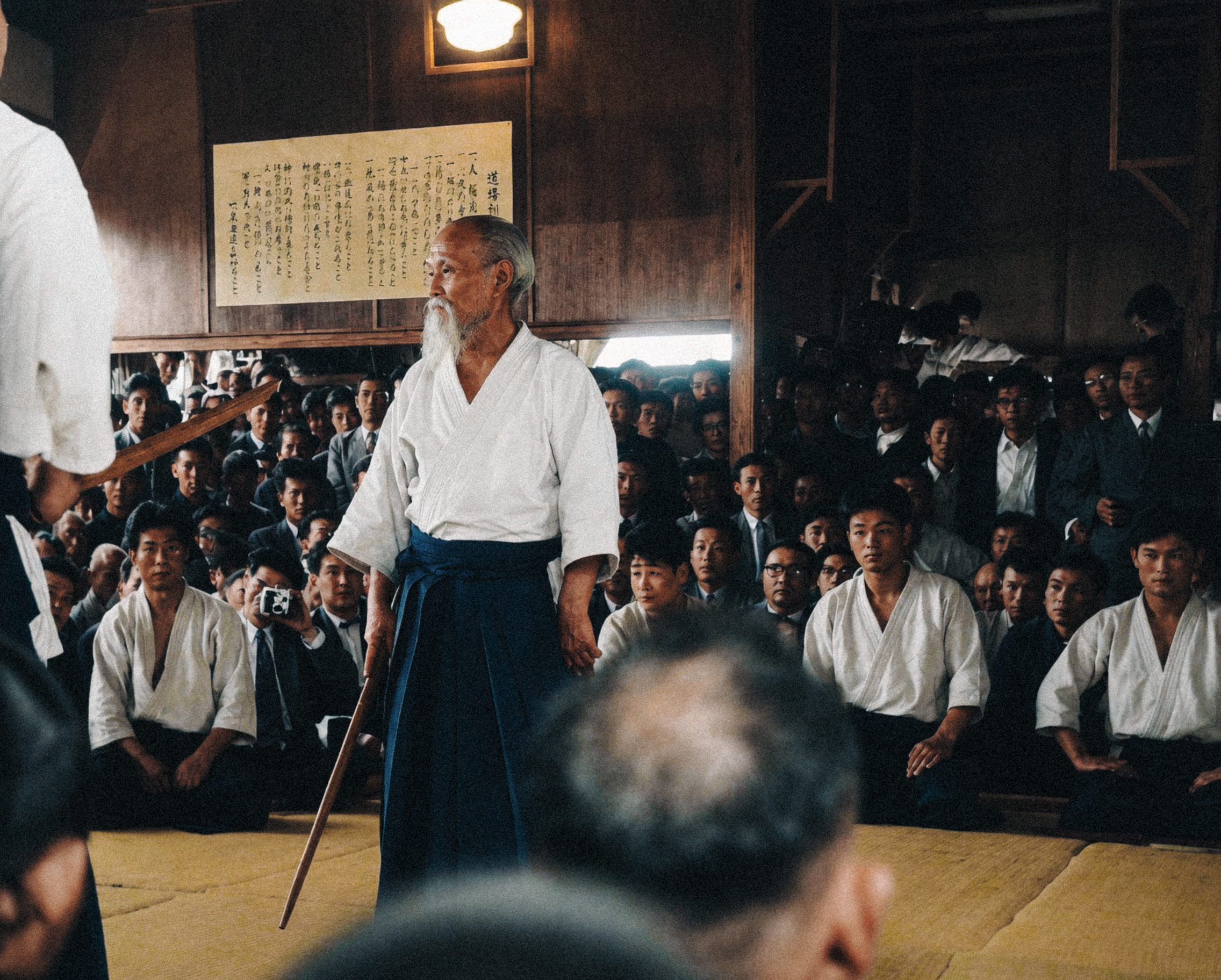
What is Aikido?
Aikido is a Japanese martial art in which practitioners use coordinated movement, balance, and timing to perform throws, joint controls, and pins. Its practice combines physical discipline with a philosophy of nonaggression and responsibility toward others. Students train cooperatively, developing technical skill while exploring how to respond to conflict with control and care.
Where Aikido comes from
Morihei Ueshiba, often called O-Sensei, or “Great Teacher,” developed Aikido through decades of martial training and personal reflection. His principal technical foundation was Daito-ryu aiki-jujutsu, studied under Sokaku Takeda.
Ueshiba’s approach came to emphasize protecting life and cultivating peaceful relationships. The name Aikido was adopted in 1942.
After World War II, his students and subsequent generations of teachers helped spread the art beyond Japan. Today, Aikido is practiced worldwide.
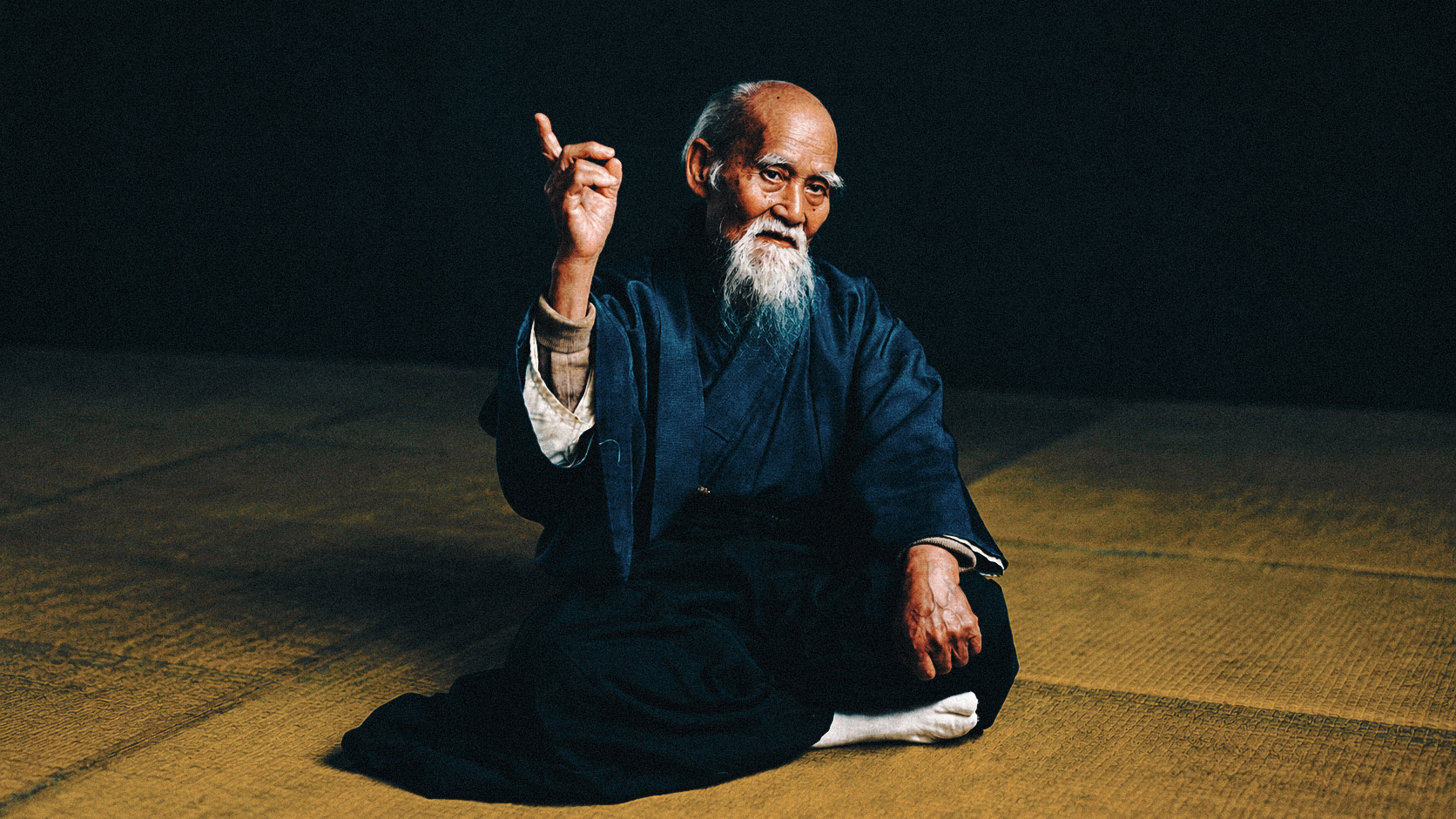
How Aikido works
Students explore how posture, distance, timing, and coordinated movement influence an encounter. They learn to move in relation to a partner, redirect pressure, and affect balance.
These skills develop through repetition and attentive instruction, with increasing precision as training progresses.
A martial discipline without competition
In our practice, students work toward understanding rather than defeating one another. Partners provide the movement and interaction needed to study a technique, with attention to each person’s experience and physical limits. Progress comes through regular training, instruction, and an increasingly clear understanding of the fundamentals.

What practice can develop
Regular practice offers a structured way to work on coordination, balance, and physical awareness.
Students learn to organize their movement, recognize unnecessary tension, and respond more attentively to a partner.
Learning also requires patience.
Repeating a technique, working through difficulty, and adjusting to different partners create opportunities to develop concentration, persistence, and consideration for others.
Beginning Aikido
No previous martial arts experience is required. Beginners start with basic movement, posture, and dojo etiquette.
Contact the dojo before visiting to ask about observing or joining a class, available age groups, schedules, fees, and clothing. Discuss any physical limitations with the instructor so you can understand what participation involves.
Find a Dojo →
What happens in a class
A class typically begins with a bow and preparatory exercises. The instructor demonstrates a technique, which students then practice in pairs.
Depending on the curriculum, training may include standing and kneeling techniques and exercises with wooden weapons. The instructor adjusts the pace and intensity to the students’ experience.
Weapons practice
Aikido training can include the bokken, a wooden sword; the jo, a wooden staff; and the tanto, a training knife.
Weapons practice develops posture, distance, timing, and coordination.
It helps students explore the relationship between armed movements and empty-handed techniques through individual exercises and partner practice.